The findings, written plainly
Every read the walk-through gives lives here in full, so you can check our reasoning whether or not you used the buttons above.
Gone heavy, or the opener strains
The spring lifts the door; your arm and the opener only steer it. A door that's grown heavy has almost always lost spring tension, through age, cycles, or a spring sized wrong from the start. An opener dragging that weight is hiding the problem and wearing itself out doing it. This is re-tension or re-spring territory, and it's routine work for a technician with winding bars.
The steer: stop lifting it by hand if it's a strain, and book it before the spring's argument with gravity ends suddenly.
Slams down, or flies up
A door that falls hard past halfway, or snatches upward at the top, is out of balance: the spring is carrying too little or too much of the door's weight. Both directions are the dangerous kind of wrong, because the door is moving with force nobody asked for.
The steer: keep people, pets and car bonnets clear of the opening, use it as little as possible, and have the tension read properly. This one shouldn't wait.
Sits crooked, or one side droops
A door that's visibly off level usually has a cable problem: one side's cable has stretched, frayed or come off its drum, so one side of the door is carrying weight the other has let go of. Tracks knocked out of true tell a similar story. A crooked door can jam in its tracks, or come down unevenly.
The steer: stop using it entirely, opener included. A door that's jumped a cable gets worse with every cycle, and the fix is far cheaper before it binds.
Grinds, screeches or rattles
Noise is usually the hardware the door rides on: dry rollers, worn hinges, a bearing announcing retirement, or a track the door is arguing with. On the bay streets, lake air moves this along a little faster than inland. A noisy door often still holds at half, which is good news, and catching it now is what keeps it from becoming a balance problem later.
The steer: a service visit sorts most of it. If the noise changes suddenly, or the door starts feeling different in the hand, treat it as the louder finding it's become.
Won't open at all
A door that won't move is several possible stories: a tripped or failed opener, an engaged manual lock nobody remembers touching, a jumped track, or a spring that's quietly failed without the bang. From a web page, nobody can honestly tell you which, and we won't pretend to.
The steer: don't force it, by hand or by leaning on the opener button. Whatever is stopping the door, force finds the weakest part, and the weakest part is never cheap. Tell us what it did in its last week and we'll come read it.
A loud bang, then dead weight
That bang was almost certainly a torsion spring breaking, and everything about the door changes in that moment: nothing is carrying its weight any more. The opener may lift it a hand's width and give up. By hand it will feel like lifting the whole door, because it is.
The steer: don't lift it, don't unbolt anything, and keep the family clear of the opening. A snapped spring is the definition of our urgent path, and once a technician is at the door it's usually a single visit to put right.
What kind of door changes the detail
- Tilt doors, the originals
- One solid panel on pivot arms with springs at the sides. Plenty of the patch's first doors are tilts, and a tilt gone heavy is often re-tensionable if the frame is still square. When the frame has racked, we say so, and the conversation turns to replacement, honestly.
- Sectional doors
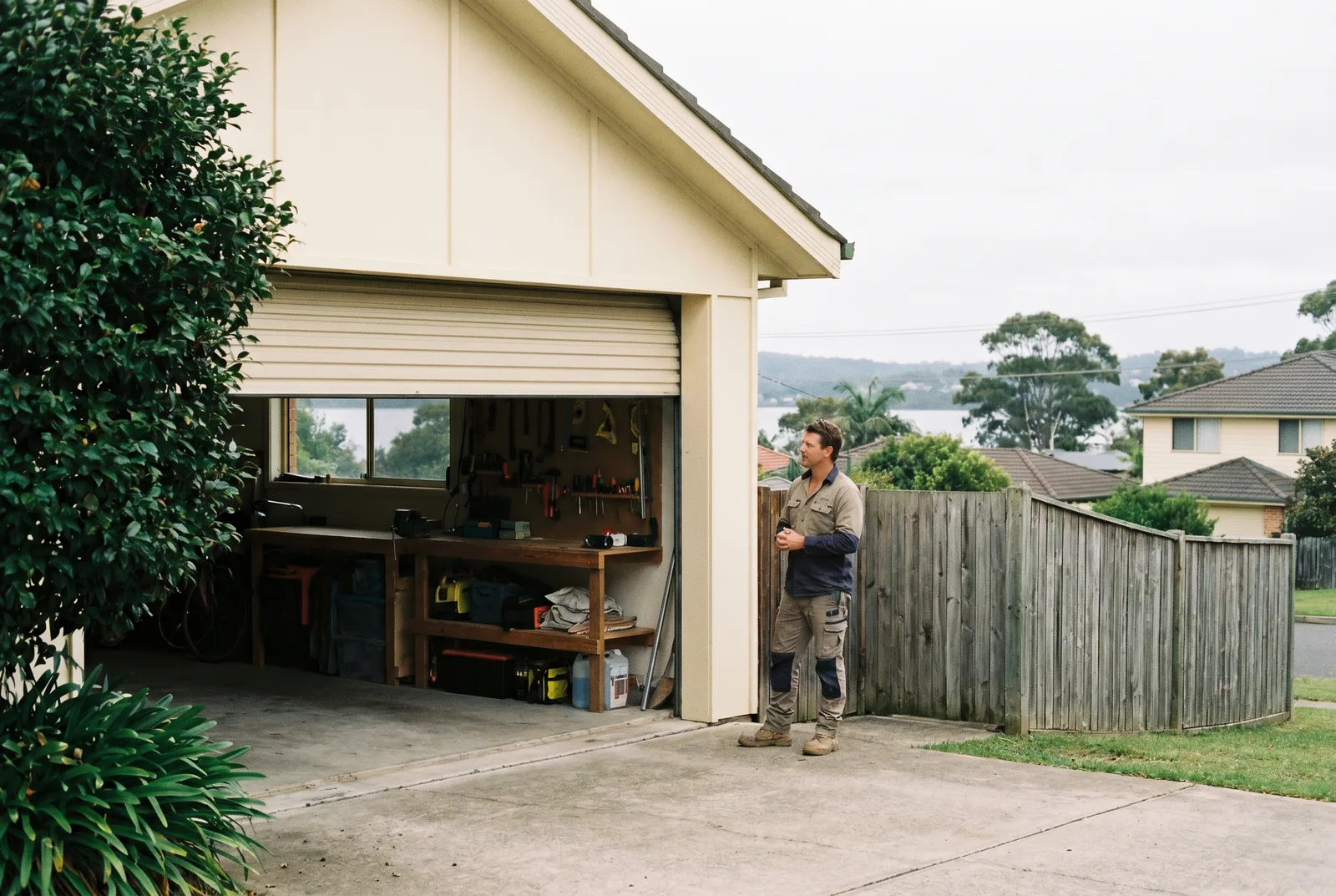
- Horizontal panels riding vertical-to-horizontal tracks, lifted by a torsion spring on a shaft above the opening. The test reads most cleanly on a sectional, and nearly all the findings above apply directly.
- Roller doors
- A corrugated curtain rolling onto a drum, with the springs hidden inside the drum itself. A heavy roller door is usually spring fatigue in that drum, and because the springs are enclosed, it is even less of a home job than the others.
- If someone lifts it by hand every day
- Then the door's balance is that person's daily load, and in the oldest market on the lake we take that seriously. A balanced door lifts light at any age; if anyone in your house is muscling a door morning and night, the door is wrong, not the person. Fixing that is exactly the work we exist for.
Want the longer story of what a heavy door is telling you? Read the guide: The half-lift test, in full.